
In the marine industry, product price is important — but when safety, vessel protection and operational reliability are involved, price should never be the only factor.
Marine airbags and pneumatic rubber fenders may look similar from the outside. However, their actual performance can vary significantly depending on the rubber compound, reinforcement layers, manufacturing process, testing standards and quality control.
1. Safety Starts with the Reinforcement Structure
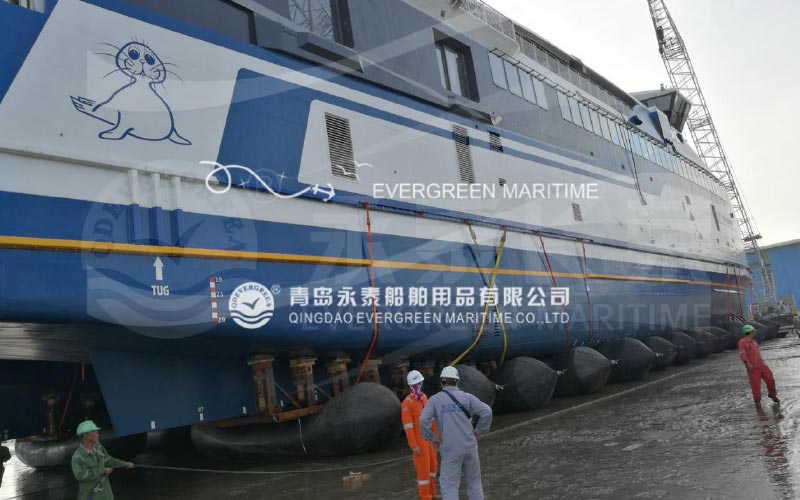
A high-quality marine airbag is not simply a large inflatable rubber tube.
The strength of the airbag depends heavily on the quality and arrangement of its high-strength synthetic tyre-cord reinforcement layers. The construction must provide sufficient resistance to internal pressure, compression and repeated loading.
A reliable manufacturing process is therefore essential to ensure consistent performance from one airbag to another.
2. Working Pressure Is Not the Only Safety Indicator
When comparing marine airbags, customers should look beyond the working pressure.
Important technical parameters include:
- Working pressure
- Test pressure
- Minimum burst pressure
- Safety factor
- Reinforcement strength
- Air-tightness
- Long-term durability
A higher advertised working pressure does not necessarily mean a safer product.
The relationship between working pressure and minimum burst pressure is particularly important when evaluating the overall safety margin of a marine airbag.
3. Rubber Quality Directly Affects Service Life
Marine airbags and pneumatic fenders are continuously exposed to demanding conditions, including:
- Salt water
- UV radiation
- Ozone
- Temperature changes
- Abrasion
- Repeated compression and impact
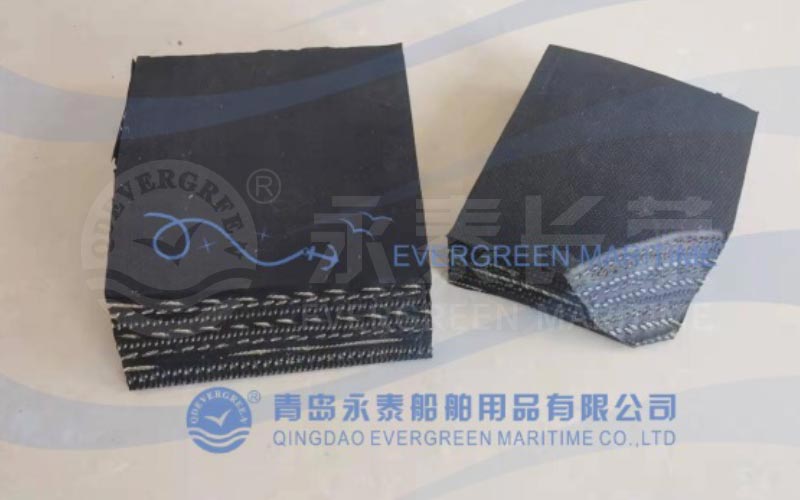
The rubber compound must therefore be designed for marine applications rather than simply optimized for low production cost.
A small difference in rubber quality can become a significant difference in service life after years of use.
4. Testing Is More Important Than Appearance
Two products may look almost identical when they are new.
The real difference becomes apparent during testing and long-term operation.
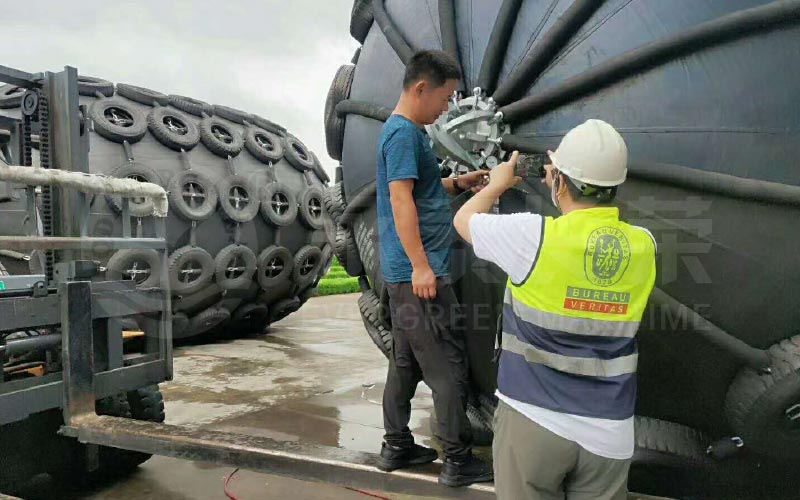
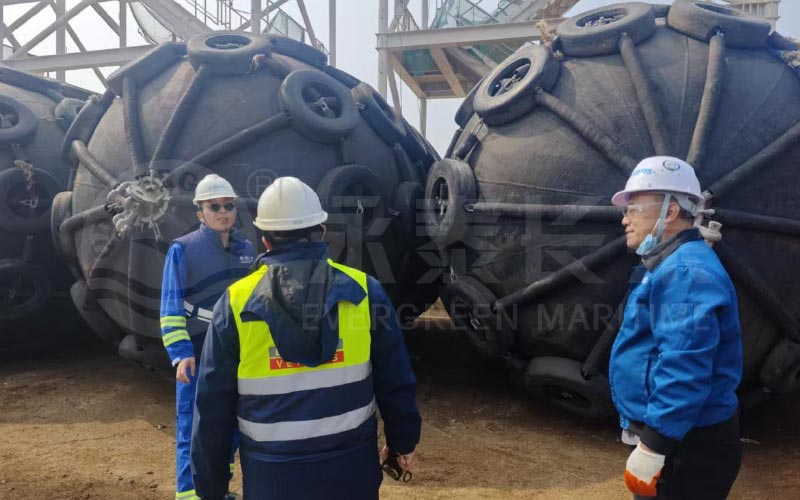
Quality control should include dimensional inspection, visual inspection, air-tightness testing, pressure testing and, where required, performance verification.
For pneumatic rubber fenders, key performance indicators include Reaction Force and Energy Absorption at the specified compression level.
5. Quality Is a Long-Term Investment
Choosing a marine airbag or pneumatic fender based only on the lowest quotation can create additional costs later through premature aging, performance degradation, replacement and operational downtime.
For critical marine applications, the better question is not:
“Which product is the cheapest?”
It is:
“Which product provides the most reliable performance and safety throughout its service life?”
At Qingdao Evergreen Maritime, we believe that quality should be built into every stage of production — from raw materials and reinforcement construction to vulcanization, testing and final inspection.

For marine airbags and pneumatic rubber fenders, quality is not an option. It is part of the safety system.
Qingdao Evergreen Maritime Co., Ltd.
Marine Airbags | Pneumatic Rubber Fenders | Foam Fenders