Port and coastal infrastructure projects worldwide are embracing a game-changing heavy-lift solution: marine rubber airbags for the safe, efficient movement of massive concrete caissons—critical structural components for gravity-type wharves, breakwaters, and offshore foundations. Recent successful deployments across Asia, Europe, and Latin America have proven this technology outperforms traditional rail, crane, and trolley systems in cost, safety, and flexibility, cementing its role as the preferred method for modern marine construction.
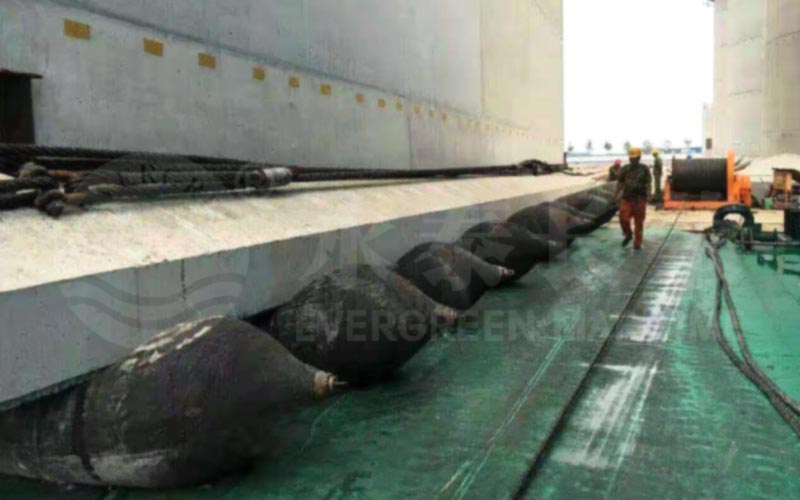
What Are Marine Airbags for Caisson Moving?
Marine airbags (also called heavy-lift launching airbags) are high-strength, multi-layer reinforced rubber inflatable cylinders, engineered to lift, roll, and transport ultra-heavy concrete structures (caissons weighing 1,500–5,000+ tons) over land, ramps, and onto submersible barges. Unlike rigid steel cradles or rail systems, these flexible airbags conform to uneven ground, distribute weight evenly, and eliminate the need for permanent, costly infrastructure. Each airbag typically features 6–10 layers of synthetic cord-reinforced rubber, rated for working pressures of 0.1–0.25 MPa, with burst safety margins exceeding three times operating pressure—meeting international standards (ISO 14409, CCS, BV, ABS) for marine heavy lifting.
Key Advantages Over Traditional Caisson Transport
1. Unmatched Cost Savings
No permanent infrastructure (rails, cradles, dry docks) needed—saves 30–50% on upfront civil works.
Airbags are reusable for 5–10+ years across multiple projects, lowering long-term costs.
Eliminates heavy crane rental and complex logistics, reducing total project expenditure significantly.
2. Superior Safety & Structural Protection
Even weight distribution minimizes bending stress on fragile concrete caissons, preventing cracks or damage during movement.
Redundant airbag design: if one unit fails, adjacent bags maintain load support, eliminating catastrophic failure risks.
Low center of gravity and controlled rolling speed reduce tipping hazards, even on sloped or uneven terrain.
3. Unprecedented Flexibility
Works on compacted soil, sand, gravel, or temporary ramps—no specialized ground preparation required.
Enables longitudinal, transverse, and even curved movement of caissons, adapting to tight site layouts.
Ideal for remote coastal sites, shallow-water areas, and projects with limited space or access for large cranes.
4. Faster Project Delivery
Setup and teardown take hours, not weeks. Each caisson move is completed in a single shift, accelerating overall port construction timelines.
Reduces dependency on weather windows and heavy equipment availability, keeping projects on schedule.
Global Adoption & Future Outlook
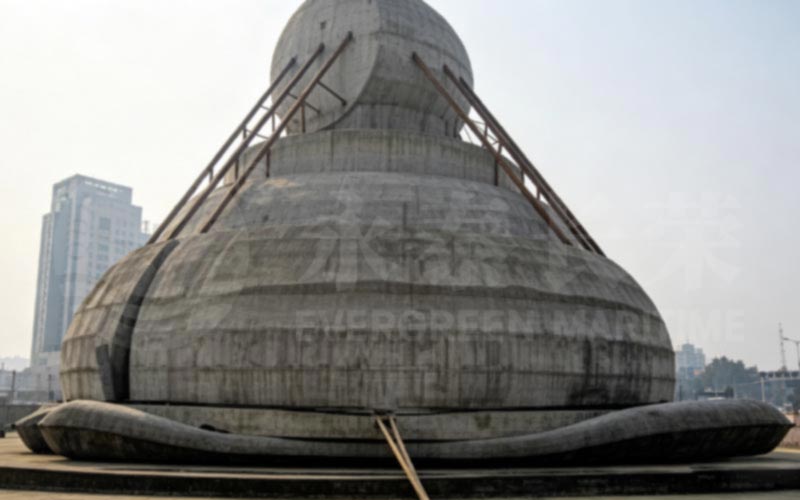
Marine airbag technology is rapidly gaining traction in port and offshore construction worldwide. Major contractors in Brazil, Portugal, the UAE, and Southeast Asia have adopted the method for caisson transport, breakwater installation, and ship launching. Industry analysts project the global marine heavy-lift airbag market will grow at a 7.2% CAGR through 2030, driven by demand for cost-effective, sustainable infrastructure solutions.
“As ports expand to handle larger vessels and offshore wind projects accelerate, the need for flexible, low-cost heavy-lift solutions has never been greater,” said a senior engineer at the International Association of Ports and Harbors (IAPH). “Marine airbags are not just a tool—they are a paradigm shift in how we move heavy marine structures, making complex projects feasible in locations previously deemed inaccessible.”
Conclusion
For port authorities, construction firms, and marine engineers, marine airbags have proven to be the definitive solution for caisson movement: safer, cheaper, faster, and more adaptable than any traditional method. As global maritime infrastructure development continues to surge, this innovative technology will remain at the forefront, enabling the efficient, sustainable delivery of critical coastal and offshore projects for decades to come.